“Почти весь абсурд происходит из имитации того, что мы не
можем повторить,” – писал доктор Джонсон.
Крест Джона Фрума
Чтобы оценить значение для нас Дня Фрума, следует ознакомиться с тем, как он приобрел официальное оформление на Новых Гебридах. На просторах Евразийского пространства он был введён еще Петром Первым, который надеялся, что обрядив нас в европейское платье, сделает нас европейцами. Это можно сделать здесь Карго-культ и здесь Мы - последователи культа самолетопоклонников..
Во время Второй мировой войны трёхсоттысячный
американский корпус базировался на Новых Гебридах (ныне Вануату). Под впечатлением
от западного богатства и мощи аборигены стали поклоняться мессии, которого они назвали Джоном Фрумом – «королём Америки» - живущим в кратере местного вулкана. С тех
пор каждый год 15 февраля они отмечают День Йона Фрума, вознося молитвы и
поднося цветы к красному кресту. Они верят, что именно в такой день Фрум
вернётся и сбросит с небес богатый груз, как это делали транспортные самолёты
во время Второй мировой войны. Они, также, проводят церемонию подъёма флага и
военный парад с бамбуковыми ружьями. У религии есть даже своя политическая
партия. Странно, но Джон Фрум никогда не существовал. Отдельная конфессия нашла
реального мессию, они поклоняются принцу Филипу, герцогу Эдинбургскому.
У нас последователей карго-культа называют еще
самолетопоклонниками.
Большая часть современной «элиты», являются последователями этого культа: купив
яхту или футбольный клуб, самолетопоклонник начинает считать себя аристократом;
приобретя на неопределенного происхождения деньги завод, воображает себя
промышленником и предпринимателем; катаясь в Бентли, воображают себя новыми
дворянами.
Хватит прикидываться христианами, у вас это плохо
получается. Готовьте цветы и рисуйте на теле звезды и ордена.
Поскольку Джеймс Бонд никогда не объяснял своего
пристрастия к мартини «взболтать, но не перемешивать», сотрудники факультета
биохимии Университета Западного Онтарио решили сами выяснить это.
Они обнаружили, что взболтанный коктейль из водки и
мартини является более сильным антиоксидантом, чем перемешанный, что позволяет
Бонду избегать кардиоваскулярных болезней, инсульта и катаракты.
В своей статье для BritishMedicalJournalисследователи сделали вывод: «отличным
состоянием здоровья 007 обязан, по крайней мере частично, исполнительным
барменам».
The UK is experiencing a new renaissance. The first Renaissance looked back to the Classical world of ancient Rome and Greece. It bridged the historical divide from the Middle Ages to modern history (at least from a European perspective). Yet we find ourselves in a still newer modern “age of technology” in which robotics, gene editing and other once-unthinkable realities are defining our existence.
To navigate and thrive in this new world, we need the new da Vincis and Michelangelos. We need individuals who are both scientist and artist: the creative visionaries. Instead, we are producing the very opposite.
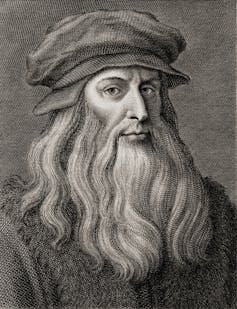
Leonardo da Vinci was the quintessential Renaissance figure – a man of art and science. Shutterstock
Young people are still being taught how to become exam-passing machines, rather than develop their ingenuity. They specialise early and see art and science as binary educational and career choices. They see educational success as a consumer might view a must-have new product on the market. They appreciate the cost of something, but not necessarily its value. It’s not their fault, it’s ours, the generations that have come before them.
The education system is outmoded, outdated and not fit for purpose. It was designed for the Enlightenment, the age of European empires, when the workforce was comprised of those who gave orders and those who took them. This time has long since passed. It is a system that focuses on the 3Rs (reading, writing, arithmetic) and its success is judged by outcome (such as league tables or degree classification) and not the actual process which asks: how can I improve? What do I need to do to get better?
The perils of being an education consumer
Like many academics, I am often asked: “How do I get a first-class degree?” We have arrived at this point because students are considered to be consumers and the idea is to keep the customer happy, rather than encourage them to be challenged, to be critical, and unafraid to take risks and make mistakes. In fact, the only kind of learning in which mistakes are activity discouraged is Errorless Learning, which helps people with memory problems learn by providing cues and instructions which prevent them from making mistakes which they might otherwise have kept repeating.
Education needs to teach children how to think independently so that they can become creative problem solvers. Shutterstock
Most of us don’t have memory problems, so we learn by trial and error. Some of the greatest discoveries have come from trial and error, by accident rather than design. Take Alexander Fleming who discovered penicillin when he was experimenting with the flu virus in 1928 and inadvertently created a mould which repelled bacteria.
In his book The Score Takes Care of Itself, Bill Walsh, former head coach of American Football team the San Francisco 49ers, applies this philosophy of focusing on process rather than outcome to leadership. So, for the first-class degree seeking student, perhaps the answer is “Your grade will take care of itself – stop trying to reverse engineer it.”
At the moment, we exist in an education culture in which the outcome has replaced a sense of wonder and opportunity; a chance to be challenged, to get better, to be fulfilled and reach our full potential – what American psychologist Abraham Maslow called self-actualisation.
The problem is that a first-class degree is no guarantee of success at postgraduate research level, in which the 3Cs (creativity, critical thinking and collaboration) are becoming increasingly important. Few modern academic endeavours don’t involve multi-, inter- or trans-disciplinary research – research that is at the edge of combined disciplinary understanding, in which creativity and collaboration are used to forge new inventions and discoveries.
The emerging field of socially assistive robots, for example, needs roboticists to provide their technical expertise, but also psychologists for theories about social interaction and research methods to help create robots for education, health and social care.
The need for creativity
The world is changing and fast and our education system is not equipping our children with the kind of minds they are going to need. But rather than finding a way to introduce greater creativity into children’s lives, the arts are being underfunded and pushed to the margins.
Minecraft is one of the world’s most successful computer games, a prime example of the collaboration between art and science. Minecraft
By contrast, in higher education, new programmes like masters degrees in human-robot interaction require this very creativity, critical thinking and collaboration in interdisciplinary research involving computer science, psychology and other subject areas.
I would go further and argue that those in the creative arts have the correct idea about learning. Guitarist John Williams said:
Good teaching in the end is about helping and inspiring people to go their own way. In a way that is creative, which might be totally different from you the teacher.
This illusory separation of art and science locks us into a two-track system that hinders discovery and stymies collaboration. German dramatist Bertolt Brecht said that “Art is not a mirror held up to reality but a hammer with which to shape.” Cinema was the art form of the 20th century and computer gaming is the art form of the 21st century – it’s hard to think of a better example of the synthesis of science and art.
So, how are we going to create the right environment for the new renaissance women and men? How are we going to create the experts, the polymaths, the independent thinkers? Like everything else, education needs to respond, develop and adapt to the times we are living in. We need a profound change in the way we approach education in the 21st century, but first we need our politicians to have a rebirth of their own.
·-Согласно Библии, Аман был повешен на изобретенной им виселице.
·-Уильям Баллок (WilliamBullock(1813-1867)) погиб при наладке изобретенной им ротационной печатной машины.
3 апреля 1867-го Уильям вносил коррективы в
работу одной из своих печатных машин, которая использовалась газетой 'Public
Ledger' в Филадельфии. Изобретатель попытался привести в движение ременной
привод на барабане, пользуясь 'самой действенной технологией' – пинком. Нога
Буллока застряла и раздробилась в машине. Через несколько дней развилась
гангрена.
·-Отто Лилиенталь погиб в 1896 году, разбившись на изобретенном им дельтаплане.
·-Известный инженер Томас Миджли сделал множество изобретений, как полезных,
так и вредных. К последним можно отнести и процесс этилирования свинцом бензина.
Последним его изобретением была механическая кровать, на канате которой его и
нашли повешенным.
·-Александр Богданов, большевик, чья книга «Эмпириомонизм» побудила
В.И.Ленина написать «Материализм и эмпириокритицизм». Богданов пропагандировал собственную теорию омоложения через переливание крови.Обменное переливание по
Богданову широко использовалось для пропаганды классовых и коммунистических
идей с привлечением высоких лиц из партийной иерархии, в частности младшей
сестры Ленина, Марии Ульяновой и Красина. Теория Богданова получила
поддержку на высшем уровне: по распоряжению Сталина был создан первый в
мире Институт крови, который
располагался на Якиманке, а сам
Богданов стал его директором. Одиннадцатое переливание стало последним: он "омолодился" кровью, зараженной туберкулезом и малярией. Наступило отторжение и смерть.
Отметим еще Джима Фикса, автора TheCompleteBookofRunning, который умер во время пробежки.
10
декабря 1813 года во время войны в Испании герцог
Веллингтон во время дождя увидел группу гвардейских гренадёров с зонтиками в
руках и отправил гневное послание: «Лорд Веллингтон не разрешает использование
зонтиков под огнём врага, и не позволяет сыновьям джентльменов выставлять себя
посмешищем в глазах армии». Позднее он подтвердил приказ: «Гвардейцы, если им
угодно, могут носить зонтики возле Сент-Джеймского дворца, но на поле боя это
не только смешно, но и опасно». Знаменитый воин был известен ограниченным умом,
что, впрочем, для полководца не является недостатком, хуже, что у него был
недостаток сочувствия. Об этом упоминал и бригадир Жерар в рассказе о том, как он играл с Бартом в карты на свободу.
Но, в отличие от рассказа бригадира, случай с зонтиками подтвержден документально.