Revolver Maps

Показаны сообщения с ярлыком The Conversation. Показать все сообщения

воскресенье, 2 августа 2020 г.

Five ways to reboot the global food economy to make it healthier for all


        Shutterstock.com


Corinna Hawkes, City, University of London

COVID-19 has shown how damaging ill-health can be for the economy. But it has also shown how measures that benefit health (lockdowns) can be seen as bad economic prosperity. A similar paradox is at the heart of promoting better diets.


Poor diet is the world’s leading cause of ill-health. Malnutrition – from undernutrition to obesity – affects at least one-third of the global population. It’s an issue of inequality, too: diet-related challenges disproportionately affect poorer people, making the economic challenge even greater.


Poor nutrition also costs businesses dearly. A recent report by research institute Chatham House estimates that businesses around the world lose as much as US$38 billion (£29 billion) a year from undernutrition and obesity among their workforce. Nevertheless, when governments attempt to take unhealthy foods out of the spotlight and place more nutritious foods centre stage, they typically rub up against economic arguments that any regulation will hurt business.


COVID-19 has shown it’s time to change. Obesity, diabetes and other chronic conditions associated with unhealthy diets increase the risk of complications from the virus (a point not lost on UK prime minister Boris Johnson, who had his own battle with the virus).


There are also predictions that the pandemic will lead to a crisis of undernutrition. As discussions about how to renew the global economy – and rethink the economic system – are heating up, food must be part of our thinking.


This five-point plan could do the work of resetting the food economy over the short term, allowing it to both flourish and nourish over the long term.


1. Financing for healthy food


Healthier food costs more. Investment is needed all the way along the food-value chain to make a healthy diet more affordable for the 3 billion people around the world who cannot afford one.


Public spending on agriculture – like subsidies for fertilisers, payments direct to farmers and plant breeding programmes, as well as policies to attract private sector investment – tends to favour crops like maize, palm oil, rice and soybeans.


These crops dominate the unhealthy food industry and leave children in low-income countries undernourished. This investment could be reallocated to diversifying and building supply chains for more nutritious foods like fruits, vegetables, beans and whole grains.



            Tractor sprays pesticides on soybean field.
           

              The building blocks of most junk food is heavily subsidised.
              Shutterstock


Investment is needed in local food supply chains too, connecting smaller and more sustainable producers of nutritious foods to consumers who need them most. E-commerce initiatives are growing in the wake of COVID-19 in many lower income countries and could be built on.


Food hubs that bring food from producers to commercial customers or direct to consumers are also growing. This would support local food economies in countries rich and poor.


Innovative financing is a vital part of the picture. For example, the Global Alliance for Improved Nutrition, an organisation working to improve the consumption of nutritious foods, has a programme that encourages investment in nutritious food businesses in low- and middle-income countries. These are small- and medium-sized businesses that play an important role in creating jobs and boosting regional economies.


In London, the Good Food Fund is a new £1.8 million business accelerator and venture fund designed to back SMEs and start-ups to produce healthier snacks for kids.


2. Make junk food less attractive


It’s relatively easy to make money by selling cheap snacks to kids and adults alike. Companies compete with each other to tempt consumers everywhere, from Dakar to Dublin. A small amount of regulation would incentivise healthy, rather than unhealthy, competition.


The fact that during lockdown some large corporations have been vying for greater market share for their cookies, pizzas and burgers shows that as long as businesses have the incentive to promote unhealthy products, they will continue to do so.


In Chile, for example, the government introduced tough, comprehensive regulations forcing food manufacturers to clearly label and market their products with how healthy (or unhealthy) they are. This enabled innovators to compete with the junk food industry and appeal to the health conscious. Similarly, taxes on sugary drinks in many countries has incentivised the industry to produce healthier products.


3. Profit with purpose


Another way to get food businesses to sell healthier products is through corporate governance mechanisms. Instead of focusing on shareholder profits, food companies could establish diet-related health as a core purpose.


Here, there is ample scope to join the growing ranks of “B corporations”. These are businesses that emphasise “social and environmental performance” alongside shareholder value. This could easily include health as a metric for food businesses.


4. Redefining success


A new package of healthy metrics is needed to define what success looks like for food businesses large and small. The Access to Nutrition Index, for instance, scores global food companies on how well they are addressing obesity and diet-related disease. In the UK, the Food Foundation has proposed metrics for investors to assess how well businesses are managing the risks and opportunities in the transition towards healthier food.


5. Public sector leading the way


Scores of cities around the world already have public procurement standards that ensure the millions of meals they serve daily in schools, nurseries, hospitals and prisons are healthy, while also providing stable markets to support vulnerable parts of the economy.


In “homegrown school feeding” and “farm-to-school” programmes, for example, public budgets are used to purchase healthy food from smaller, family, farmers while ensuring kids are well fed. Evidence from Nepal and the United States shows that if designed well, these programmes work.


Implementing this five-point plan will have its challenges. But every element has been tried and tested already. It’s all doable. The task now is to implement them as a package to ensure the different elements are in place to repurpose the food economy – and indeed reform the global economy – for better, healthier eating.


The coronavirus has highlighted that the public is eager to see courageous leadership. Now is the time to step up and ensure we have an economy that is both nourishing and flourishing.The Conversation


Corinna Hawkes, Professor of Food Policy, City, University of London


This article is republished from The Conversation under a Creative Commons license. Read the original article.

понедельник, 6 июля 2020 г.

Lockdown 'funnelling': how the pandemic has changed our relationships


Emilie Vrain, University of East Anglia; Louise Ryan, London Metropolitan University, and Michel Grossetti, Université Toulouse – UMR LISST, ENSFEA

The coronavirus lockdown has been a unique social experience that has had significant effects on our social relationships. Some have been strengthened while others have come under severe strain. Many people have found themselves confined for prolonged periods of time with other people and have come into conflict with each other. Others have experienced lockdown alone, resulting in profound social isolation. Some of our everyday interactions have intensified and others have not been possible at all.

And because our relationships are such an important part of ourselves, it is essential to understand how these extreme conditions may have changed them – not just in the short term but potentially also in the months and years ahead.

According to a recent survey by insurance company Aviva, the number of adults aged 25 to 34 who wish to end their relationship has tripled from 2% in December 2019 to 7% in May 2020.

And the preliminary results of a large-scale survey, conducted in France during a highly restrictive lockdown, revealed how lockdown has had a “funnelling effect” on relationships. Some contacts were prioritised and strengthened through care, support and increased communication, while other connections have fizzled out or been damaged.

Although the sample was skewed towards women and the more educated, the survey’s 16,000 respondents provide a fascinating insight into how a significant proportion of the French population experienced the lockdown.

Respondents perceived confinement as having severely tested and sometimes transformed personal relationships. Although the lockdown was short in the grand scale of a lifetime, the reported “radical” changes in relationships during this period indicate that, for some, long-term alterations to their social ties may have occurred. New friendships have been formed and contact with others lost.

Many people turned first and foremost to family or close friends, caring about their health and wellbeing. They offered emotional support, sometimes providing material and practical help and benefited from the same support in return. 


              Women respondents were more likely to be actively holding relationships together.
              Shutterstock


Interestingly, age and gender emerge as especially significant factors in how people are managing their relationships. Women appear to be the communicators during the lockdown and play the main role in maintaining social ties. In particular, women living in couples largely undertake the caring relationships for family or vulnerable friends. They were also more likely to report that they found the lockdown to be a stressful period. 


Older men in the more affluent groups reported that the lockdown had been a period of calm when they could relax a bit more and enjoy spending time at home.  Nonetheless, in general, it was male respondents who were more likely to report that their relationships with their partner had deteriorated during the lockdown.

Age and family life stage were also significant factors. People with young children tended to have increased levels of communication with their parents as sources of mutual support, advice and care. Young adults without caring responsibilities tended to communicate more with friends, rather than their relatives.


In general, young adults who were usually quite sociable and accustomed to frequently going out found the lockdown difficult but compensated by engaging more in online activities. Students especially experienced relational instability, often reporting the loss of contacts, unable to maintain their generally larger social networks.

For the older generation (+60yrs), results reveal the majority (59%) neither lost nor made new contacts. Among respondents in this age category, those who did create new relationships, 72% of them were with neighbours. However, this again seemed to be more apparent among female respondents.

Overall, the results of the French survey suggest that lockdown has reinforced strong ties such as family and close friends, but left other relationships sidelined and sifted out, such as colleagues or friends from group activities.

Studying these changing roles and relationships during the pandemic enables us to understand which kinds of social connections are prioritised during times of severe crisis.

We are keen to understand if people in the UK have reacted in similar ways so we’re running another online survey, asking people to tell us about their personal experiences and social relationships. The survey is open to adults living in the UK and will run until August 15. Anyone interested in taking part can click here.The Conversation

Emilie Vrain, Senior Research Associate, School of Environmental Sciences, University of East Anglia; Louise Ryan, Senior Professor, School of Social Professions, London Metropolitan University, and Michel Grossetti, Research Director in the French National Research Centre (CNRS) and School for Advanced Studies in the Social Sciences (EHESS), Université Toulouse – UMR LISST, ENSFEA

This article is republished from The Conversation under a Creative Commons license. Read the original article.

пятница, 7 февраля 2020 г.

How climate change caused the world's first ever empire to collapse


        King Naram-Sin of Akkad, grandson of Sargon, leading his army to victory.
        Rama / Louvre, CC BY-SA


Vasile Ersek, Northumbria University, Newcastle

Gol-e-Zard Cave lies in the shadow of Mount Damavand, which at more than 5,000 metres dominates the landscape of northern Iran. In this cave, stalagmites and stalactites are growing slowly over millennia and preserve in them clues about past climate events. Changes in stalagmite chemistry from this cave have now linked the collapse of the Akkadian Empire to climate changes more than 4,000 years ago.

Akkadia was the world’s first empire. It was established in Mesopotamia around 4,300 years ago after its ruler, Sargon of Akkad, united a series of independent city states. Akkadian influence spanned along the Tigris and Euphrates rivers from what is now southern Iraq, through to Syria and Turkey. The north-south extent of the empire meant that it covered regions with different climates, ranging from fertile lands in the north which were highly dependent on rainfall (one of Asia’s “bread baskets”), to the irrigation-fed alluvial plains to the south.


              The Akkad empire during the reign of Narâm-Sîn (2254-2218 BC). Mount Damavand is labelled in blue.
              Zunkir / Semhir / wiki, CC BY-SA


It appears that the empire became increasingly dependent on the productivity of the northern lands and used the grains sourced from this region to feed the army and redistribute the food supplies to key supporters. Then, about a century after its formation, the Akkadian Empire suddenly collapsed, followed by mass migration and conflicts. The anguish of the era is perfectly captured in the ancient Curse of Akkad text, which describes a period of turmoil with water and food shortages:


… the large arable tracts yielded no grain, the inundated fields yielded no fish, the irrigated orchards yielded no syrup or wine, the thick clouds did not rain.


Drought and dust


The reason for this collapse is still debated by historians, archaeologists and scientists. One of the most prominent views, championed by Yale archaeologist Harvey Weiss (who built on earlier ideas by Ellsworth Huntington), is that it was caused by an abrupt onset of drought conditions which severely affected the productive northern regions of the empire.


              Sargon of Akkad – or maybe his son, Naram-Sin.
              Iraqi Directorate General of Antiquities / wiki


Weiss and his colleagues discovered evidence in northern Syria that this once prosperous region was suddenly abandoned around 4,200 years ago, as indicated by a lack of pottery and other archaeological remains. Instead, the rich soils of earlier periods were replaced by large amounts of wind-blown dust and sand, suggesting the onset of drought conditions. Subsequently, marine cores from the Gulf of Oman and the Red Sea which linked the input of dust into the sea to distant sources in Mesopotamia, provided further evidence of a regional drought at the time.

Many other researchers viewed Weiss’s interpretation with scepticism, however. Some argued, for example, that the archaeological and marine evidence was not accurate enough to demonstrate a robust correlation between drought and societal change in Mesopotamia.

A new detailed climate record


Now, stalagmite data from Iran sheds new light on the controversy. In a study published in the journal PNAS, led by Oxford palaeoclimatologist Stacy Carolin, colleagues and I provide a very well dated and high resolution record of dust activity between 5,200 and 3,700 years ago. And cave dust from Iran can tell us a surprising amount about climate history elsewhere.

Gol-e-Zard Cave might be several hundred miles to the east of the former Akkadian Empire, but it is directly downwind. As a result, around 90% of the region’s dust originates in the deserts of Syria and Iraq. 


              Mount Damavand is a ‘potentially active’ volcano, and the highest peak in Iran. Gol-e-Zard Cave is nearby.
              Vasile Ersek, Author provided


That desert dust has a higher concentration of magnesium than the local limestone which forms most of Gol-e-Zard’s stalagmites (the ones which grow upwards from the cave floor). Therefore, the amount of magnesium in the Gol-e-Zard stalagmites can be used as an indicator of dustiness at the surface, with higher magnesium concentrations indicating dustier periods, and by extension drier conditions.

The stalagmites have the additional advantage that they can be dated very precisely using uranium-thorium chronology. Combining these methods, our new study provides a detailed history of dustiness in the area, and identifies two major drought periods which started 4,510 and 4,260 years ago, and lasted 110 and 290 years respectively. The latter event occurs precisely at the time of the Akkadian Empire’s collapse and provides a strong argument that climate change was at least in part responsible.

The collapse was followed by mass migration from north to south which was met with resistance by the local populations. A 180km wall – the “Repeller of the Amorites” – was even built between the Tigris and Euphrates in an effort to control immigration, not unlike some strategies proposed today. The stories of abrupt climate change in the Middle East therefore echo over millennia to the present day.The Conversation

Vasile Ersek, Senior Lecturer in Physical Geography, Northumbria University, Newcastle

This article is republished from The Conversation under a Creative Commons license. Read the original article.

понедельник, 13 января 2020 г.

Humans aren't designed to be happy – so stop trying


        Marcos Mesa Sam Wordley/Shutterstock.com


Rafael Euba, King's College London

A huge happiness and positive thinking industry, estimated to be worth US$11 billion a year, has helped to create the fantasy that happiness is a realistic goal. Chasing the happiness dream is a very American concept, exported to the rest of the world through popular culture. Indeed, “the pursuit of happiness” is one of the US’s “unalienable rights”. Unfortunately, this has helped to create an expectation that real life stubbornly refuses to deliver.

Because even when all our material and biological needs are satisfied, a state of sustained happiness will still remain a theoretical and elusive goal, as Abd-al-Rahman III, Caliph of Córdoba in the tenth century, discovered. He was one of the most powerful men of his time, who enjoyed military and cultural achievements, as well as the earthly pleasures of his two harems. Towards the end of his life, however, he decided to count the exact number of days during which he had felt happy. They amounted to precisely 14.

Happiness, as the Brazilian poet Vinicius de Moraes put it, is “like a feather flying in the air. It flies light, but not for very long.” Happiness is a human construct, an abstract idea with no equivalent in actual human experience. Positive and negative affects do reside in the brain, but sustained happiness has no biological basis.  And – perhaps surprisingly – I reckon this is something to be happy about.

Nature and evolution


Humans are not designed to be happy, or even content. Instead, we are designed primarily to survive and reproduce, like every other creature in the natural world. A state of contentment is discouraged by nature because it would lower our guard against possible threats to our survival.

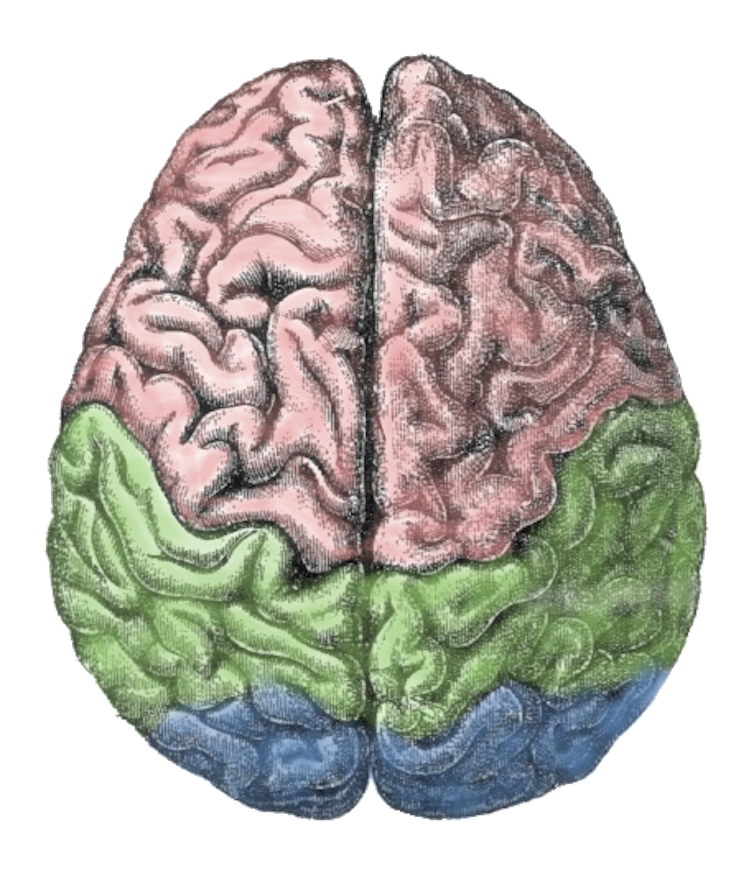
The fact that evolution has prioritised the development of a big frontal lobe in our brain (which gives us excellent executive and analytical abilities) over a natural ability to be happy, tells us a lot about nature’s priorities. Different geographical locations and circuits in the brain are each associated with certain neurological and intellectual functions, but happiness, being a mere construct with no neurological basis, cannot be found in the brain tissue.

In fact, experts in this field argue that nature’s failure to weed out depression in the evolutionary process (despite the obvious disadvantages in terms of survival and reproduction) is due precisely to the fact that depression as an adaptation plays a useful role in times of adversity, by helping the depressed individual disengage from risky and hopeless situations in which he or she cannot win. Depressive ruminations can also have a problem solving function during difficult times.


              Where is happiness located?
              Gutenberg Encyclopedia, CC BY-SA


Morality


The current global happiness industry has some of its roots in Christian morality codes, many of which will tell us that there is a moral reason for any unhappiness we may experience. This, they will often say, is due to our own moral shortcomings, selfishness and materialism. They preach a state of virtuous psychological balance through renunciation, detachment and holding back desire.

In fact, these strategies merely try to find a remedy for our innate inability to enjoy life consistently, so we should take comfort in the knowledge that unhappiness is not really our fault. It is the fault of our natural design. It is in our blueprint.

Advocates of a morally correct path to happiness also disapprove of taking shortcuts to pleasure with the help of psychotropic drugs. George Bernard Shaw said: “We have no more right to consume happiness without producing it than to consume wealth without producing it.” Well-being apparently needs to be earned, which proves that it is not a natural state.

The inhabitants of Aldous Huxley’s Brave New World live perfectly happy lives with the help of “soma”, the drug that keeps them docile but content. In his novel, Huxley implies that a free human being must inevitably be tormented by difficult emotions. Given the choice between emotional torment and content placidity, I suspect many would prefer the latter.

But “soma” doesn’t exist, so the problem isn’t that accessing reliable and consistent satisfaction by chemical means is illicit; rather that it’s impossible. Chemicals alter the mind (which can be a good thing sometimes), but since happiness is not related to a particular functional brain pattern, we cannot replicate it chemically.

Happy and unhappy


Our emotions are mixed and impure, messy, tangled and at times contradictory, like everything else in our lives. Research has shown that positive and negative emotions and affects can coexist in the brain relatively independently of each other. This model shows that the right hemisphere processes negative emotions preferentially, whereas positive emotions are dealt with by the left-sided brain.

It’s worth remembering, then, that we are not designed to be consistently happy. Instead, we are designed to survive and reproduce. These are difficult tasks, so we are meant to struggle and strive, seek gratification and safety, fight off threats and avoid pain. The model of competing emotions offered by coexisting pleasure and pain fits our reality much better than the unachievable bliss that the happiness industry is trying to sell us. In fact, pretending that any degree of pain is abnormal or pathological will only foster feelings of inadequacy and frustration.

Postulating that there is no such thing as happiness may appear to be a purely negative message, but the silver lining, the consolation, is the knowledge that dissatisfaction is not a personal failure. If you are unhappy at times, this is not a shortcoming that demands urgent repair, as the happiness gurus would have it. Far from it. This fluctuation is, in fact, what makes you human.The Conversation

Rafael Euba, Consultant and Senior Lecturer in Old Age Psychiatry, King's College London

This article is republished from The Conversation under a Creative Commons license. Read the original article.

пятница, 25 октября 2019 г.

Donald Trump's war on facts is the latest play in a long-established tradition to create a post-truth reality


        When facts are fiction.
        Shutterstock/MIA Studio


Sverre Spoelstra, Lund University

This is the “post-truth age”. Over the past few years, politicians from Europe to South America and the US, have been labelled “post-truth leaders”, with US president Donald Trump becoming the standard bearer for this strange new world.

But post-truth leadership is nothing new. Ever since sociologist and political economist Max Weber developed his notion of charismatic leadership in the early 20th century, many societies have been infatuated with the idea that leaders ought not to concern themselves too much with factual reality. In fact, leadership has long been “post-truth”, a topic I explore in my recent book.

According to Weber (1864-1920), “charismatic leadership” is a form of authority that derives from the attribution of extraordinary qualities to an individual by his (rarely her) followers, qualities that, in a quite literal sense, do not belong to the normal order. This distinguishes charismatic leadership from the authority of law or tradition, which are ordinary forms of domination that do not rely on an exceptional human individual.

The religious origins of the notion of charisma (from the Greek χάρισμα, meaning “gift of grace”) are not coincidental. Weber elevates the charismatic leader to a sphere that is uncontaminated by the reality and constraints of ordinary life. Weber’s charismatic leader is essentially transgressive, one who oversteps the bounds of the present order and whose supporters take these transgressions as proof of their leader’s extraordinary character.

The ‘wimp factor’


Such otherworldly expectations can be difficult for leaders to live up to. Prior to his election, former US president George H W Bush was criticised for a lack of “vision”. Indeed, rather than embracing the idea of becoming a charismatic leader, Bush responded with open contempt for “the vision thing”. Newsweek magazine later spun this comment into a famous cover story that framed a feeble Bush in terms of his battle with the “wimp factor”“. This image of a weak leader lacking in vision was to haunt Bush throughout the single term of his presidency.


      Read more:
      The surprising origins of 'post-truth' – and how it was spawned by the liberal left


The expectation that "real” leaders must have a compelling vision is important for understanding the relationship between leadership and truth. A vision may be seen as a “higher truth” by the leader’s supporters or, alternatively, as a “great lie” by their opponents.

Either way, visions have little to do with facts. A factual statement talks about the actual, about the things that are in the present, or have happened in the past. But the image of the visionary or charismatic leader is of someone who thinks and speaks in grand terms about the future.


Such future-oriented speech cannot be fact-checked because it belongs to the domain of the potential, the as-yet-unrealised world of what might yet come to be. Martin Luther King’s “I Have a Dream” speech, for instance, conveys a vision that has come to be seen as a great truth, but it is not, itself, a true or false statement. It is a vision – albeit one of inspiring justice and hope.

More contentious visionary claims, such as Trump’s promise to “Make America great again”, are similarly immune to falsification.


Indeed, it is unsurprising that politicians who want to be perceived as “great” leaders will often avoid statements that can be fact-checked as they focus instead on captivating their audiences with visions of the world to come.

By avoiding the realm of the factual, leaders can demonstrate that their minds are not shaped by the past or the present. Rather, they already – in a sense – inhabit a glorious future and show the rest of us how we can join them. It is a future where Ronald Reagan’s “Shining City Upon A Hill” will become ever brighter, but will likely also remain ever elusive, a promise that need never be kept.


And so Trump, as the New York Times wryly observed, is “trying to create an atmosphere in which reality is irrelevant”. For Weber, this is part and parcel of the nature of charismatic leadership: by demonstrating a lack of interest in the past and the present, charismatic leaders create the image that they belong to a higher sphere in order to bring about future change.

So what’s new?


While leadership has been a post-truth pursuit for a long time, dating back to well before Weber, there is something strange and new about contemporary post-truth leaders such as Trump. In contrast to Weber’s charismatic leader, who does not concern himself with the factual, Trump and his administration do speak, very frequently, in the language of facts. Of course, these aren’t really facts based in reality, but rather “alternative facts” spun out of a parallel, often fictional, version of how things are.


Indeed, this is something that has fuelled the rise of fact-checking media. Uncovering the falsehoods of a leader like Trump, who has at least 12,000 to his name according to The Washington Post, is unquestionably a vital task for the preservation of a healthy democracy. But it is equally important to ask what it is he achieves by saying things that are demonstrably false.

The reason why few commentators have asked this question may be because the answer seems to be too obvious to warrant much consideration: by lying about the facts, Trump and other post-truth leaders aim to deceive people into thinking more highly of them and their policies than they deserve. There is, no doubt, some truth to this, but it is not the full story.


      Read more:
      Fake news: emotions and experiences, not more data, could be the antidote


Trump’s lies are as much a demonstration of power as they are statements that intend to deceive. Trump’s infamous campaign promise to “lock up” Hillary Clinton if elected was hardly meant to be believed – it was primarily an attempt to create an image of himself as someone whose power stands above the law.


              Obama: a bigger inauguration than Trump. In the real world, at least.
              Shutterstock


Even the lies that do aim to deceive their audiences, perhaps most famously Trump’s demonstrably false claim that his inauguration attracted a larger audience than that of his predecessor Barack Obama, also show to his constituency that he has no need to conform to the norms according to which ordinary people must abide. In this sense, he is still a characteristic example of the transgressive Weberian leader.

What is new in post-truth leadership is not its disinterest in reality, but the way in which it demonstrates its otherworldliness: not by avoiding factual statements, but by showing contempt for their importance. This combative approach to facts may be new but its effect is very much in line with traditional charismatic leadership. For, in demonstrating his otherworldliness, a figure like Trump also creates a faith-based world in which he can define what is true.

The present effort to impeach Trump is not merely a power struggle between the Democrats and the Republicans, and nor is it merely a question of the powers of bureaucracy versus a “rogue” leader. The issue is both broader and deeper: it is a test on a grand scale of how deeply ingrained the Weberian notion of leadership is in the Western world.The Conversation

Sverre Spoelstra, Associate professor, Lund University

This article is republished from The Conversation under a Creative Commons license. Read the original article.

понедельник, 16 сентября 2019 г.

Five climate change science misconceptions – debunked


        Make an informed decision based on the facts.
        Lightspring/Shutterstock


Mark Maslin, UCL

The science of climate change is more than 150 years old and it is probably the most tested area of modern science. However the energy industry, political lobbyists and others have spent the last 30 years sowing doubt about the science where none really exists. The latest estimate is that the world’s five largest publicly-owned oil and gas companies spend about US$200m each year on lobbying to control, delay or block binding climate-motivated policy.

This organised and orchestrated climate change science denial has contributed to the lack of progress in reducing global green house gas (GHG) emissions - to the point that we are facing a global climate emergency. And when climate change deniers use certain myths – at best fake news and at worse straight lies – to undermine the science of climate change, ordinary people can find it hard to see through the fog. Here are five commonly used myths and the real science that debunks them. 


1. Climate change is just part of the natural cycle


The climate of the Earth has always changed, but the study of palaeoclimatology or “past climates” shows us that the changes in the last 150 years – since the start of the industrial revolution – have been exceptional and cannot be natural. Modelling results suggest that future predicted warming could be unprecedented compared to the previous 5m years.


              Global temperatures for the last 65m years and possible future global warming depending on the amount of greenhouse gases we emit.
              Burke et al (2018)


The “natural changes” argument is supplemented with the story that the Earth’s climate is just recovering from the cooler temperatures of the Little Ice Age (1300-1850AD) and that temperatures today are really the same as the Medieval Warm Period (900–1300AD). The problem is that both the Little Ice Age and the Medieval Warming period were not global but regional changes in climate affecting north-west Europe, eastern America, Greenland and Iceland.

A study using 700 climate records showed that, over the last 2,000 years, the only time the climate all around the World has changed at the same time and in the same direction has been in the last 150 years, when over 98% of the surface of the planet has warmed.


2. Changes are due to sunspots/galactic cosmic rays


Sunspots are storms on the sun’s surface that come with intense magnetic activity and can be accompanied by solar flares. These sunspots do have the power to modify the climate on Earth. But scientists using sensors on satellites have been recording the amount of the sun’s energy hitting Earth since 1978 and there has been no upward trend. So they cannot be the cause of the recent global warming.


              A comparison of global surface temperature changes (red line) and the sun’s energy received by the Earth (yellow line) in watts (units of energy) per square metre since 1880.
              NASA, CC BY


Galactic cosmic rays (GCRs) are high-energy radiation that originates outside our solar system and may even be from distant galaxies. It has been suggested that they may help to seed or “make” clouds. So reduced GCRs hitting the Earth would mean fewer clouds, which would reflect less sunlight back into space and so cause Earth to warm.

But there are two problems with this idea. First, the scientific evidence shows that GCRs are not very effective at seeding clouds. And second, over the last 50 years, the amount of GCRs have actually increased, hitting record levels in recent years. If this idea were correct, GCRs should be cooling the Earth, which they aren’t.


3. CO₂ is a small part of the atmosphere – it can’t have a large heating affect


              Eunice Newton Foote’s paper, Circumstances Affecting the Heat of the Sun’s Rays, American Journal of Science, 1857.


This is an attempt to play a classic common-sense card but is completely wrong. In 1856, American scientist Eunice Newton Foote conducted an experiment with an air pump, two glass cylinders and four thermometers. It showed that a cylinder containing carbon dioxide and placed in the sun trapped more heat and stayed warmer longer than a cylinder with normal air. Scientists have repeated these experiments in the laboratory and in the atmosphere, demonstrating again and again the greenhouse effect of carbon dioxide.

As for the “common sense” scale argument that a very small part of something can’t have much of an effect on it, it only takes 0.1 grams of cyanide to kill an adult, which is about 0.0001% of your body weight. Compare this with carbon dioxide, which currently makes up 0.04% of the atmosphere and is a strong greenhouse gas. Meanwhile, nitrogen makes up 78% of the atmosphere and yet is highly unreactive.


4. Scientists manipulate all data sets to show a warming trend


This is not true and a simplistic device used to attack the credibility of climate scientists. It would require a conspiracy covering thousands of scientists in more than a 100 countries to reach the scale required to do this.

Scientists do correct and validate data all the time. For example we have to correct historic temperature records as how they were measured has changed. Between 1856 and 1941, most sea temperatures were measured using seawater hoisted on deck in a bucket. Even this was not consistent as there was a shift from wooden to canvas buckets and from sailing ships to steamships, which altered the height of the ship’s deck – and these changes in turn altered the amount of cooling caused by evaporation as the bucket was hoisted onto deck. Since 1941, most measurements have been made at the ship’s engine water intakes, so there’s no cooling from evaporation to account for.

We must also take account that many towns and cities have expanded and so that meteorological stations that were in rural areas are now in urban areas which are usually significantly warmer than the surrounding countryside.

If we didn’t make these changes to the original measurements, then Earth’s warming over the last 150 years would have appeared to be even greater than the change that has actually been observed, which is now about 1˚C of global warming.


              Reconstruction of global temperatures from 1880 to 2018 by five independent international groups of scientists.
              NASA, CC BY


5. Climate models are unreliable and too sensitive to carbon dioxide


This is incorrect and misunderstands how models work. It is a way of downplaying the seriousness of future climate change. There is a huge range of climate models, from those aimed at specific mechanisms such as the understanding of clouds, to general circulation models (GCMs) that are used to predict the future climate of our planet.

There are over 20 major international centres where teams of some of smartest people in the world have built and run GCMs containing millions of lines of code representing the very latest understanding of the climate system. These models are continually tested against historic and palaeoclimate data as well as individual climate events such as large volcanic eruptions to make sure they reconstruct the climate, which they do extremely well.


              Model reconstruction of global temperature since 1970, average of the models in black with model range in grey compared to observational temperature records from NASA, NOAA, HadCRUT, Cowtan and Way, and Berkeley Earth.
              Carbon Brief, CC BY


No single model should ever be considered correct as they represent a very complex global climate system. But having so many different models constructed and calibrated independently means that we can have confidence when the models agree.
Taking the whole range of climate models suggests a doubling of carbon dioxide could warm the planet by 2˚C to 4.5˚C, with an average of 3.1˚C. All the models show a significant amount of warming when extra carbon dioxide is added to the atmosphere. The scale of the predicted warming has remained very similar over the last 30 years despite the huge increase in the complexity of the models, showing it is a robust outcome of the science. 


By combining all our scientific knowledge of natural (solar, volcanic, aerosols and ozone) and human-made (greenhouse gases and land-use changes) factors warming and cooling the climate shows that 100% of the warming observed over the last 150 years is due to humans.


              Natural and Human influences on global temperatures since 1850.
              Carbon Brief, CC BY


There is no scientific support for the continual denial of climate change. The Intergovernmental Panel on Climate Change (IPCC), set up by the United Nations to openly and transparently summarise the science, provides six clear lines of evidence for climate change. As extreme weather becomes more and more common, people are realising that they do not need scientists to tell them the climate is changing – they are seeing and experiencing it first hand.


This article is part of The Covering Climate Now series

This is a concerted effort among news organisations to put the climate crisis at the forefront of our coverage. This article is published under a Creative Commons license and can be reproduced for free – just hit the “Republish this article” button on the page to copy the full HTML coding. The Conversation also runs Imagine, a newsletter in which academics explore how the world can rise to the challenge of climate change. Sign up hereThe Conversation

Mark Maslin, Professor of Earth System Science, UCL

This article is republished from The Conversation under a Creative Commons license. Read the original article.

среда, 4 сентября 2019 г.

Smiling depression': it's possible to be depressed while appearing happy – here's why that's particularly dangerous


        Putting on a mask doesn’t make depression any easier.
        Alyssa L. Miller/Flickr, CC BY-SA


Olivia Remes, University of Cambridge

The term “smiling depression” – appearing happy to others while internally suffering depressive symptoms – has become increasingly popular. Articles on the topic have crept up in the popular literature, and the number of Google searches for the condition has increased dramatically this year. Some may question, however, whether this is actually a real, pathological condition.

While smiling depression is not a technical term that psychologists use, it is certainly possible to be depressed and manage to successfully mask the symptoms. The closest technical term for this condition is “atypical depression”. In fact, a significant proportion of people who experience a low mood and a loss of pleasure in activities manage to hide their condition in this way. And these people might be particularly vulnerable to suicide. 

It can be very hard to spot people suffering from smiling depression. They may seem like they don’t have a reason to be sad – they have a job, an apartment and maybe even children or a partner. They smile when you greet them and can carry pleasant conversations. In short, they put on a mask to the outside world while leading seemingly normal and active lives.


Inside, however, they feel hopeless and down, sometimes even having thoughts about ending it all. The strength that they have to go on with their daily lives can make them especially vulnerable to carrying out suicide plans. This is in contrast to other forms of depression, in which people might have suicide ideation but not enough energy to act on their intentions.

Although people with smiling depression put on a “happy face” to the outside world, they can experience a genuine lift in their mood as a result of positive occurrences in their lives. For example, getting a text message from someone they’ve been craving to hear from or being praised at work can make them feel better for a few moments before going back to feeling low. 


              People with smiling depression can feel better temporarily.
              4 PM production/Shutterstock


Other symptoms of this condition include overeating, feeling a sense of heaviness in the arms and legs and being easily hurt by criticism or rejection.  People with smiling depression are also more likely to feel depressed in the evening and feel the need to sleep longer than usual. With other forms of depression, however, your mood might be worse in the morning and you might feel the need for less sleep than you’re normally used to.

Smiling depression seems to be more common in people with certain temperaments. In particular, it is linked to being more prone to anticipate failure, having a hard time getting over embarrassing or humiliating situations and tending to ruminate or excessively think about negative situations that have taken place. 

Women’s Health magazine captured the essence of smiling depression – the façade – when it asked women to share pictures from their social media and then to recaption them on Instagram with how they really felt in the moment they were taking the picture. Here are some of their posts.

Burden and treatment


It is difficult to determine exactly what causes smiling depression, but low mood can stem from a number of things, such as work problems, relationship breakdown and feeling as if your life doesn’t have purpose and meaning. 

It is very common. About one in ten people are depressed, and
between 15% and 40% of these people suffer from the atypical form that resembles smiling depression. Such depression often starts early in life and can last a long time. 

If you suffer from smiling depression it is therefore particularly important to get help. Sadly, though, people suffering from this condition usually don’t, because they might not think that they have a problem in the first place – this is particularly the case if they appear to be carrying on with their tasks and daily routines as before. They may also feel guilty and rationalise that they don’t have anything to be sad about. So they don’t tell anybody about their problems and end up feeling ashamed of their feelings.

So how can you break this cycle? A starting point is knowing that this condition actually exists and that it’s serious. Only when we stop rationalising away our problems because we think they’re not serious enough can we start making an actual difference. For some, this insight may be enough to turn things around, because it puts them on a path to seeking help and breaking free from the shackles of depression that have been holding them back.


              Exercise and meditation can help.
              Yuganov Konstantin/Shutterstock


Meditation and physical activity have also been shown to have tremendous mental health benefits. In fact, a study done by Rutgers University in the US showed that people who had done meditation and physical activity twice a week experienced a drop of almost 40% in their depression levels only eight weeks into the study. Cognitive behavioural therapy, learning to change your thinking patterns and behaviour, is another option for those affected by this condition.

And finding meaning in life is of utmost importance. The Austrian neurologist Viktor Frankl wrote that the cornerstone of good mental health is having purpose in life. He said that we shouldn’t aim to be in a “tensionless state”, free of responsibility and challenges, but rather we should be striving for something in life. We can find purpose by taking the attention away from ourselves and placing it onto something else. So find a worthwhile goal and try to make regular progress on it, even if it’s for a small amount each day, because this can really have a positive impact. 

We can also find purpose by caring for someone else. When we take the spotlight off of us and start to think about someone else’s needs and wants, we begin to feel that our lives matter. This can be achieved by volunteering, or taking care of a family member or even an animal.

Feeling that our lives matter is ultimately what gives us purpose and meaning – and this can make a significant difference for our mental health and well-being.


In the UK, Samaritans can be contacted on 116 123 or by email – jo@samaritans.org. Other similar international helplines can be found here.The Conversation

Olivia Remes, PhD Candidate, University of Cambridge

This article is republished from The Conversation under a Creative Commons license. Read the original article.