The UK is experiencing a new renaissance. The first Renaissance looked back to the Classical world of ancient Rome and Greece. It bridged the historical divide from the Middle Ages to modern history (at least from a European perspective). Yet we find ourselves in a still newer modern “age of technology” in which robotics, gene editing and other once-unthinkable realities are defining our existence.
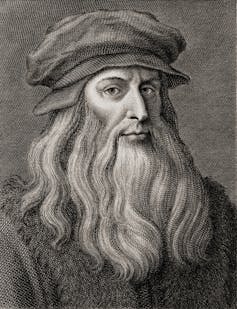
To navigate and thrive in this new world, we need the new da Vincis and Michelangelos. We need individuals who are both scientist and artist: the creative visionaries. Instead, we are producing the very opposite.
Leonardo da Vinci was the quintessential Renaissance figure – a man of art and science. Shutterstock
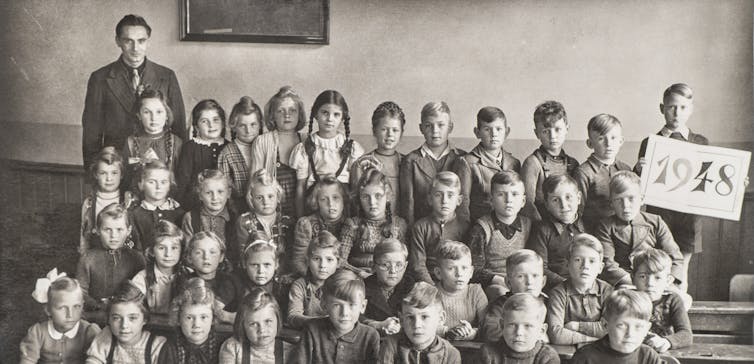
Young people are still being taught how to become exam-passing machines, rather than develop their ingenuity. They specialise early and see art and science as binary educational and career choices. They see educational success as a consumer might view a must-have new product on the market. They appreciate the cost of something, but not necessarily its value. It’s not their fault, it’s ours, the generations that have come before them.
The education system is outmoded, outdated and not fit for purpose. It was designed for the Enlightenment, the age of European empires, when the workforce was comprised of those who gave orders and those who took them. This time has long since passed. It is a system that focuses on the 3Rs (reading, writing, arithmetic) and its success is judged by outcome (such as league tables or degree classification) and not the actual process which asks: how can I improve? What do I need to do to get better?
The perils of being an education consumer
Like many academics, I am often asked: “How do I get a first-class degree?” We have arrived at this point because students are considered to be consumers and the idea is to keep the customer happy, rather than encourage them to be challenged, to be critical, and unafraid to take risks and make mistakes. In fact, the only kind of learning in which mistakes are activity discouraged is Errorless Learning, which helps people with memory problems learn by providing cues and instructions which prevent them from making mistakes which they might otherwise have kept repeating.
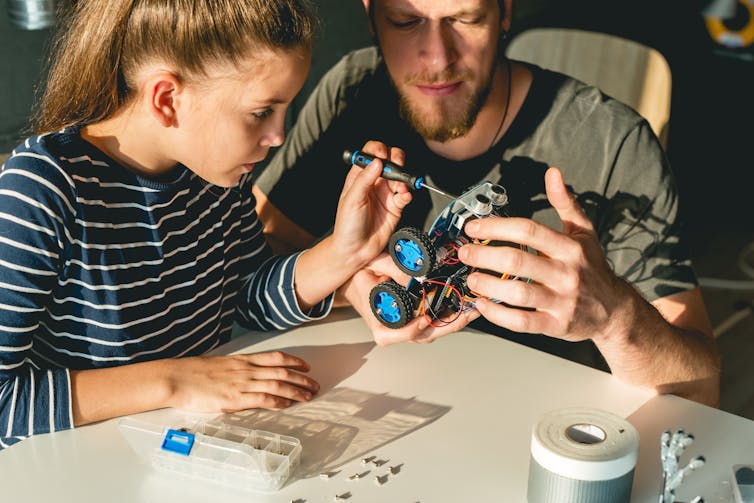
Education needs to teach children how to think independently so that they can become creative problem solvers. Shutterstock
Most of us don’t have memory problems, so we learn by trial and error. Some of the greatest discoveries have come from trial and error, by accident rather than design. Take Alexander Fleming who discovered penicillin when he was experimenting with the flu virus in 1928 and inadvertently created a mould which repelled bacteria.
In his book The Score Takes Care of Itself, Bill Walsh, former head coach of American Football team the San Francisco 49ers, applies this philosophy of focusing on process rather than outcome to leadership. So, for the first-class degree seeking student, perhaps the answer is “Your grade will take care of itself – stop trying to reverse engineer it.”
At the moment, we exist in an education culture in which the outcome has replaced a sense of wonder and opportunity; a chance to be challenged, to get better, to be fulfilled and reach our full potential – what American psychologist Abraham Maslow called self-actualisation.
The problem is that a first-class degree is no guarantee of success at postgraduate research level, in which the 3Cs (creativity, critical thinking and collaboration) are becoming increasingly important. Few modern academic endeavours don’t involve multi-, inter- or trans-disciplinary research – research that is at the edge of combined disciplinary understanding, in which creativity and collaboration are used to forge new inventions and discoveries.
The emerging field of socially assistive robots, for example, needs roboticists to provide their technical expertise, but also psychologists for theories about social interaction and research methods to help create robots for education, health and social care.
The need for creativity
The world is changing and fast and our education system is not equipping our children with the kind of minds they are going to need. But rather than finding a way to introduce greater creativity into children’s lives, the arts are being underfunded and pushed to the margins.
Minecraft is one of the world’s most successful computer games, a prime example of the collaboration between art and science. Minecraft
By contrast, in higher education, new programmes like masters degrees in human-robot interaction require this very creativity, critical thinking and collaboration in interdisciplinary research involving computer science, psychology and other subject areas.
I would go further and argue that those in the creative arts have the correct idea about learning. Guitarist John Williams said:
Good teaching in the end is about helping and inspiring people to go their own way. In a way that is creative, which might be totally different from you the teacher.
This illusory separation of art and science locks us into a two-track system that hinders discovery and stymies collaboration. German dramatist Bertolt Brecht said that “Art is not a mirror held up to reality but a hammer with which to shape.” Cinema was the art form of the 20th century and computer gaming is the art form of the 21st century – it’s hard to think of a better example of the synthesis of science and art.
So, how are we going to create the right environment for the new renaissance women and men? How are we going to create the experts, the polymaths, the independent thinkers? Like everything else, education needs to respond, develop and adapt to the times we are living in. We need a profound change in the way we approach education in the 21st century, but first we need our politicians to have a rebirth of their own.
·-Согласно Библии, Аман был повешен на изобретенной им виселице.
·-Уильям Баллок (WilliamBullock(1813-1867)) погиб при наладке изобретенной им ротационной печатной машины.
3 апреля 1867-го Уильям вносил коррективы в
работу одной из своих печатных машин, которая использовалась газетой 'Public
Ledger' в Филадельфии. Изобретатель попытался привести в движение ременной
привод на барабане, пользуясь 'самой действенной технологией' – пинком. Нога
Буллока застряла и раздробилась в машине. Через несколько дней развилась
гангрена.
·-Отто Лилиенталь погиб в 1896 году, разбившись на изобретенном им дельтаплане.
·-Известный инженер Томас Миджли сделал множество изобретений, как полезных,
так и вредных. К последним можно отнести и процесс этилирования свинцом бензина.
Последним его изобретением была механическая кровать, на канате которой его и
нашли повешенным.
·-Александр Богданов, большевик, чья книга «Эмпириомонизм» побудила
В.И.Ленина написать «Материализм и эмпириокритицизм». Богданов пропагандировал собственную теорию омоложения через переливание крови.Обменное переливание по
Богданову широко использовалось для пропаганды классовых и коммунистических
идей с привлечением высоких лиц из партийной иерархии, в частности младшей
сестры Ленина, Марии Ульяновой и Красина. Теория Богданова получила
поддержку на высшем уровне: по распоряжению Сталина был создан первый в
мире Институт крови, который
располагался на Якиманке, а сам
Богданов стал его директором. Одиннадцатое переливание стало последним: он "омолодился" кровью, зараженной туберкулезом и малярией. Наступило отторжение и смерть.
Отметим еще Джима Фикса, автора TheCompleteBookofRunning, который умер во время пробежки.
10
декабря 1813 года во время войны в Испании герцог
Веллингтон во время дождя увидел группу гвардейских гренадёров с зонтиками в
руках и отправил гневное послание: «Лорд Веллингтон не разрешает использование
зонтиков под огнём врага, и не позволяет сыновьям джентльменов выставлять себя
посмешищем в глазах армии». Позднее он подтвердил приказ: «Гвардейцы, если им
угодно, могут носить зонтики возле Сент-Джеймского дворца, но на поле боя это
не только смешно, но и опасно». Знаменитый воин был известен ограниченным умом,
что, впрочем, для полководца не является недостатком, хуже, что у него был
недостаток сочувствия. Об этом упоминал и бригадир Жерар в рассказе о том, как он играл с Бартом в карты на свободу.
Но, в отличие от рассказа бригадира, случай с зонтиками подтвержден документально.
Роберт Клэй Эллисон родившийся
в 1840 году в Уэйнсборо, Теннесси, уже в юности отличался чудаковатостью. Во
время гражданской войны он воевал в составе 3-го кавалерийского полка Теннесси,
но был уволен по медицинским показаниям с диагнозом «частично эпилептический и
частично маниакальный», возникшим вероятно в результате детской травмы головы.
Поработав некоторое время
ковбоем на ранчо знаменитых техасских скотоводов Оливера Лавли и Чарльза
Гуднайта, Эллисон завел собственное ранчо возле Симарона в Нью Мехико. Ссоседямионсошелсялегко, единственнымнедостаткомегобылавспыльчивость. В октябре 1870 года был арестован некто Чарльз Кеннеди
с матерью. Ихзаподозриливтом, чтоониубивалииграбилиостанавливавшихсяунихпостояльцев. Носудьятянулсрассмотрениемдела. ТогдаЭллисонорганизовалтолпувозмущенныхгражданиповелеёнаштурмместнойтюрьмы. ЗахвативЧарльзаКеннеди, толпаповесилаего. АдомаусемействаКеннедиобнаружилизакопанныеостанкижертв. Подобное бдительное правосудие не было чем-то
необычным в то время, но у жителей города остался осадок после того, как
Эллисон обезглавил тело Кеннеди и выставил его голову на шесте в салуне.
Репутация Эллисона,
как опасного человека, укрепилась после того, как в 1874 году он, на спор,
хладнокровно застрелил знаменитого стрелка, выстрелив ему прямо над правым
глазом. А годом позже в составе толпы линчевал подозреваемого в убийстве Круса
Вегу, повесив его на телеграфном столбе. Но и в этот раз этого ему показалось
мало и он, привязав тело Веги к коню, таскал его по камням и кустам до тех пор,
пока оно не превратилось в ошметки.
Когда сын убитого им
бандита, банда которого терроризировала местное население, решил расправиться с
Эллисоном, то он пригласил Клэя отобедать в салуне. Во время обеда бандит
выхватил пистолет, но Эллисон оказался быстрее.
На вопрос шерифа, зачем он принял приглашение на обед, зная, что его захотят
убить, Эллисон ответил: «Не мог же я отправить человека в ад с пустым желудком».
В 1881 году Эллисон
женился и переехал на свое ранчо в Пенхендле. Жена родила ему двух дочерей и,
похоже, семейная жизнь смягчила его нрав. Однако, поведениеегооставалосьэксцентричным. Так однажды он посетил
зубного врача в Шайене, Вайоминг, который начал сверлить ему не тот зуб.
Эллисон пошел к другому врачу, который вылечил ему больной зуб, после чего
вернулся к первому эскулапу, повалил его и вырвал ему плоскогубцами зуб.
Странно, что американские историки считают этот поступок эксцентричным.
1 июня 1887 года
Эллисон погиб, попав под колёса тяжелогруженого фургона, перевозя груз на свое
ранчо к северу от Пекоса. В последний путь его провожали все жители близлежащих селений.
В 1975 году прах Эллисона
был перенесен на кладбище в Пекосе.
Надпись на камне
гласит: «Роберт Клей Эллисон. Джентльмен и стрелок». Пояснительная надпись
добавляет, что «Он никогда не убивал человека, если тот в этом не нуждался".
Существуют диаметрально противоположные оценки этого джентльмена, рассмотрим их в дальнейшем.
Bibliotherapy – the idea that reading can have a beneficial effect on mental health – has undergone a resurgence. There is mounting clinical evidence that reading can, for example, help people overcome loneliness and social exclusion. One scheme in Coventry allows health professionals to prescribe books to their patients from a list drawn up by mental health experts.
Even as public library services across Britain are cut back, the healing potential of books is increasingly recognised.
The idea of the healing book has a long history. Key concepts were forged in the crucible of World War I, as nurses, doctors and volunteer librarians grappled with treating soldiers’ minds as well as bodies. The word “bibliotherapy” itself was coined in 1914, by American author and minister Samuel McChord Crothers. Helen Mary Gaskell (1853-1940), a pioneer of “literary caregiving”, wrote about the beginnings of her war library in 1918:
Surely many of us lay awake the night after the declaration of War, debating … how best we could help in the coming struggle … Into the mind of the writer came, like a flash, the necessity of providing literature for the sick and wounded.
The well-connected Gaskell took her idea to the medical and governmental authorities, gaining official approval. Lady Battersea, a close friend, offered her a Marble Arch mansion to store donated books, and The Times carried multiple successful public appeals. As Gaskell wrote:
What was our astonishment when not only parcels and boxes, but whole libraries poured in. Day after day vans stood unloading at the door.
Gaskell’s library was affiliated to the Red Cross in 1915 and operated internationally – with depots in Egypt, Malta, and Salonika. Her operating principles, axiomatic to bibliotherapy, were to provide a “flow of comfort” based on a “personal touch”. Gaskell explained that “the man who gets the books he needs is the man who really benefits from our library, physically and mentally”.
Her colleagues running Endell Street Military Hospital’s library shared similar views about the importance of books in wartime. On August 12, 1916, the Daily Telegraph reported on the hospital, calling the library a “story in itself”. Run by novelist Beatrice Harraden, a member of the Womens Social and Political Union and also, briefly, the actress and feminist playwright Elizabeth Robins, the library was a fundamental part of the treatment of 26,000 wounded between 1915 and 1918.
“We learned,” Robins wrote in Ancilla’s Share, her 1924 analysis of gender politics, “that the best way, often the only way, to get on with curing men’s bodies was to do something for their minds.”
The books the men wanted first were likely to be by the ex-journalist and popular writer Nat Gould, whose novels about horseracing were bestsellers. Otherwise, fiction by Rudyard Kipling, Marie Corelli, or Robert Louis Stevenson rated highly. In the Cornhill Magazine in November, 1916, Harraden revealed that the librarians’ “pilgrimages” from one bedside to another ensured what she called “good literature” was always within reach, but that the book that would “heal” was the one that was most wanted:
However ill [a patient] was, however suffering and broken, the name of Nat Gould would always bring a smile to his face.
The literary caregivers at Endell Street worked responsively, and without judgement, a crucial legacy.
Library on the frontline
Literary caregiving also took place closer to the front. Throughout the war, the YMCA operated a network of recreation huts and lending libraries for soldiers. After losing his only son, Oscar, at Ypres, the author E. W. Hornung offered his services to the YMCA. Hornung – a relatively obscure figure now, but a literary celebrity then – authored the “Raffles” stories about the gentleman thief of the same name.
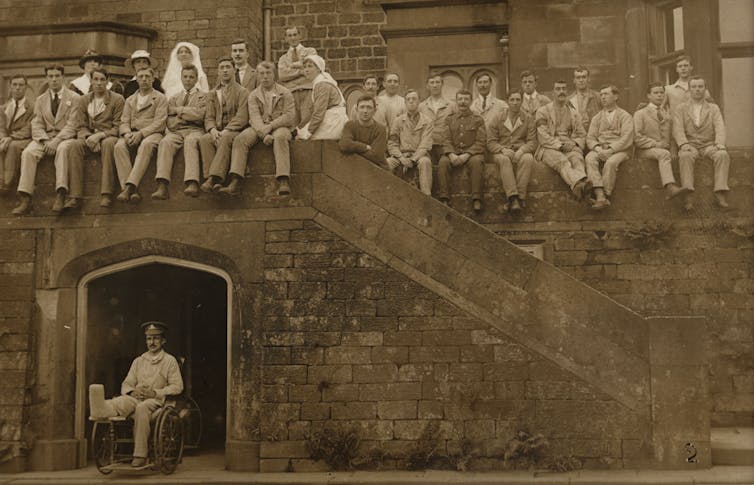
Longshaw Lodge Convalescent Home for Wounded Soldiers, Grindleford, near Sheffield. Tyne & Wear Archives & Museums
Arriving in France in late 1917, Hornung was initially put to work serving tea to British soldiers. But the YMCA soon found him a more suitable job, placing him in charge of a new lending library for soldiers in Arras. Dispensing tea and books to soldiers helped him process his grief. Hearing soldiers talk about their favourite books played a key role in his recovery – but he also sincerely believed that reading helped soldiers keep their minds healthy while they were in the trenches. Hornung wrote in 1918 that he wanted to feed “the intellectually starved”, while “always remembering that they are fighting-men first and foremost, and prescribing for them both as such and as the men they used to be”.
Writing a new future
Present-day veterans encounter the potential of reading and writing in equally participatory ways as interventions with the charities Combat Stress UK (CSUK) and Veterans’ Outreach Services demonstrate.
In CSUK, we read widely from contemporary work before undertaking writing exercises. These were designed to help provide detachment from the internal repetition of traumatic stories that some with PTSD experience. The director of therapy at CSUK, Janice Lobban, says:
Collaborative work … gave combat stress veterans the valuable opportunity of developing creative writing skills. Typically, the clinical presentation of veterans causes them to avoid unfamiliar situations and the loss of self-confidence can affect the ability to develop creative potential. Workshops within the safety of our Surrey treatment centre enabled veterans to have the confidence to experiment with new ideas.
Another approach, in workshops with Veterans’ Outreach Support in Portsmouth in 2018, explored the role of writing in training veterans to become “peer-mentors” of other veterans wanting to access VOS services, ranging from physical and mental wellness to housing benefits to job-seeking.
The results show that veterans responded positively to opportunities for imaginative writing. Trainee peer-mentors responding to a questionnaire told us that the exercises helped them to write fluently about their own lives. For people who spend so much time filling out forms to access various benefits, the opportunity to write creatively was seen as a liberating experience. As one veteran put it: “We are writing into ourselves”.
For 100 years now, reading and writing have helped veterans build relationships, gain confidence and face the challenges of their post-service lives. Our current research charts the influence of wartime literary caregiving on contemporary practice.